Excavators are among the most essential machines in the construction and mining industries, playing a critical role in tasks such as digging, lifting, and handling heavy materials. Their versatility and power make them indispensable. However, the hydraulic system is one of the most pressurized and heavily loaded components.
When an excavator experiences mechanical or operational issues, it can lead to costly downtime, project delays, and a significant increase in maintenance expenses. Therefore, understanding the root causes of hydraulic power loss and applying proactive solutions is crucial for maintaining operational efficiency and minimizing disruptions.
I. The Heart of the Job Site: Why Your Excavator’s Efficiency is Your Top Priority
The hydraulic system is the heart of an excavator, directing the flow of power for movement and lifting capacity. A malfunction in this system directly results in inefficient equipment, leading to operational delays.
The main goal is to prevent minor issues from escalating into catastrophic failures. By implementing a proactive maintenance approach, owners and operators can ensure the longevity of their machines and maintain reliability in demanding work environments.
Don’t forget, we also offer a wide range of spare parts for heavy machinery, so feel free to inquire about any replacement needs you may have. Just click on contact us.
II. Warning Signs: Is Your Excavator Moving Slow, Jerky, or Noisy?
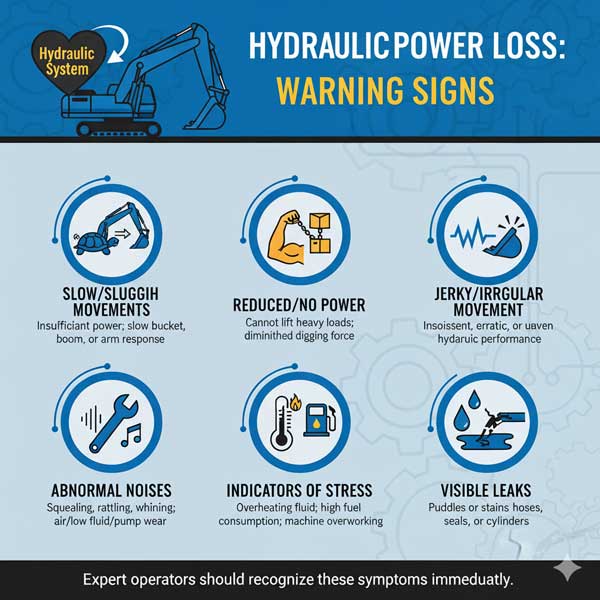
Hydraulic power loss manifests through clear symptoms that expert operators should recognize immediately:
- Slow or Sluggish Movements: The hydraulic power is insufficient to perform tasks efficiently. The bucket, boom, or arm responds slowly or poorly.
- Reduced or No Power: The excavator cannot lift heavy loads, or the digging force is diminished.
- Irregular or Jerky Movement: The hydraulic performance becomes inconsistent, erratic, or uneven.
- Abnormal Noises: Noises such as squealing, rattling, whining, or grinding indicate underlying problems, often air in the system (cavitation), low fluid levels, or pump wear.
- Indicators of Stress: Overheating of the hydraulic fluid or high fuel consumption signals that the machine is working harder than necessary due to inefficiency.
- Visible Leaks: The presence of puddles or oil stains on hoses, seals, or cylinders.
III. Diagnosis and Root Causes: The Anatomy of a Failure
An accurate diagnosis begins with identifying the root cause. Failures can often be traced back to key system components, such as the pump, valves, filters, or fluids.
A. Fluid-Related Failures and Contamination
- Low Hydraulic Fluid Levels: Insufficient fluid causes a pressure drop, weakening the system. Additionally, low levels can cause friction and result in cavitation or overheating.
- Contaminated Fluid: Dirt, debris, or water in the fluid is the leading cause of hydraulic system failure. Impurities restrict flow and damage components. If the fluid appears dark, cloudy, or foamy, it is contaminated.
B. Pressure and Flow Failures
- Clogged Filters: Dirty hydraulic or air filters restrict oil flow. This can cause a loss of pressure or pressure spikes that damage other components, such as seals.
- Fluid Leaks (Seals, Hoses): Leaks of vital fluids (hydraulic, oil, or coolant) are the result of worn or damaged seals, cracked hoses, or loose connections. Internal leaks, such as those caused by worn cylinder seals, also reduce efficiency and can cause drift.
C. Major Component Issues
- Hydraulic Pump Failure: A worn or damaged pump cannot generate adequate flow or pressure. Rattling or whining noises may indicate pump wear or air in the system.
- Engine or Power Unit Failure: The power source is critical. If the engine is not running properly or needs service (e.g., dirty diesel or air filters), it cannot supply the necessary power to the hydraulic pumps. If all hydraulic functions are slow, this may indicate a power unit failure or that the flexible drive coupling is worn and slipping.
- Malfunctioning Control Valves: A stuck, blocked, or damaged valve restricts fluid flow, preventing effective pressure regulation.
IV. Practical Solutions and Expert Tips
To restore functionality, a systematic troubleshooting approach is recommended:
Practical Troubleshooting Guide
Fluid Inspection and Management:
- Daily Check: Check hydraulic fluid and coolant levels daily, as many mini-excavators do not have low-level sensors. Perform the check on level ground with the machine turned off.
- Replacement: Replace contaminated or dirty fluid with clean, high-quality oil, according to the manufacturer’s specifications.
- Critical Step: Bleed the system to remove trapped air that causes jerky movements and inefficiency.
Filter Maintenance:
- Replace hydraulic filters at the recommended service intervals (e.g., every 500 operating hours).
- If filters are heavily clogged, replace them immediately to ensure optimal airflow to the engine (in the case of the air filter).
Leak Detection and Repair:
- Visual Inspection: Visually inspect hoses, seals, and connections for signs of wear, cracks, or leaks. Visible leaks should be repaired immediately.
- Component Replacement: Replace worn seals and damaged hoses.
- Advanced Tool: Use a dye light or UV dye to help identify hard-to-find or minor leaks.
Major Component Diagnostics:
- Pump: If a pump failure is suspected, measure the pressure and flow. The pump’s efficiency can be evaluated by comparing the actual flow to the rated flow (volumetric efficiency) and checking the force required to operate it (mechanical/hydraulic efficiency). Replace worn or failing pumps.
- Engine: If the engine does not start, bleed the fuel system to remove air pockets. If the power loss is due to an engine problem (e.g., the RPM drops under load), inspect the diesel filters and the air filter.
- Controls and Valves:
- Inspect control valves for blockages. Clean or replace faulty valves and their solenoids.
- Cylinders: If drift or uneven movement is observed, replace the cylinder seals.
V. Advanced Maintenance Strategies and Proactivity
To ensure continuous productivity and minimize costly downtime, transitioning from reactive repairs to Preventive (PM) and predictive maintenance is indispensable.
Structured Planning and Monitoring
- PM Implementation: It is essential to follow the manufacturer’s recommended service intervals for engine oil, hydraulic fluid, and filters.
- Management Tools: Use maintenance management software (CMMS) like FieldEx to manage assets and work orders, and to keep service teams synchronized with automated alerts. This helps ensure that service is completed on time and in compliance with guidelines.
- Fluid Inspection: Fluid quality inspection is recommended every 100-200 hours.
Technology and High-Level Prevention
- Digital Diagnostics: Modern excavators come with on-board diagnostic software; operators should regularly check for error codes and address warnings promptly.
- Artificial Intelligence and Sensors: Implementing smart sensors and AI can find problems before they worsen. This allows for early fault detection, which translates to fewer repairs and a longer equipment lifespan.
Operational and Acquisition Tips
- Operator Training: Ensure operators are well-trained and understand best practices to avoid improper operating techniques that can cause excessive wear on the machine.
- Deep Routine Maintenance: In addition to changing filters (every 500 hours), a full service is recommended after every 600 hours of use.
- Pre-Purchase Inspection: When considering used excavators, it is crucial to test the machine to ensure smooth and responsive hydraulic movement, and to inspect hoses and seals for leaks or cracks before purchase.
Proper maintenance is crucial for extending the life of an excavator and preventing costly downtime. The hydraulic system, being the primary driver of productivity, requires meticulous attention.
By adopting a proactive approach and following a structured maintenance routine, operators and service personnel can prevent minor annoyances from becoming catastrophic failures. Applying detailed diagnostic knowledge and utilizing asset management tools (like FieldEx) are essential steps to keep equipment at peak performance, ensuring its long-term reliability and efficiency.